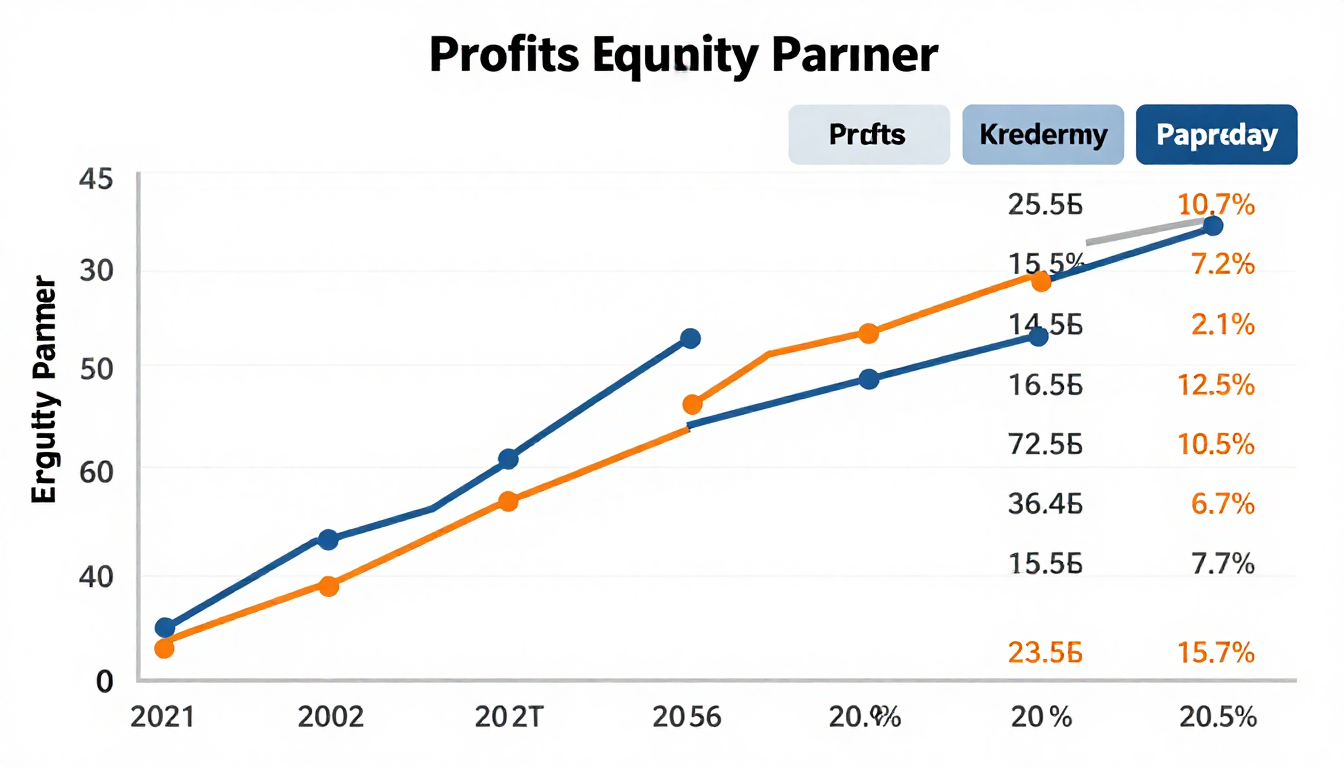
What is Profits Per Equity Partner? A Simple Guide to Law Firm Success
Have you ever wondered how the world’s biggest law firms measure their success? While total revenue is great, it doesn’t tell the whole story. The “gold standard” metric that everyone looks at is profits per equity partner. In simple terms, this number shows how much money is left for the owners of the firm after all the bills are paid.
Think of a law firm like a big team. Some people on the team are employees, while others are owners (the equity partners). After the firm pays for office rent, electricity, and the salaries of all the staff, the remaining cash is the profit. When you take that big pile of profit and divide it by the number of owners, you get the profits per equity partner. It is the ultimate way to see how efficient and wealthy a firm truly is.
In this guide, we will break down why this number is so important. We will look at how firms calculate it and why it’s the main thing lawyers talk about when they compare different workplaces.
Why This Metric Matters for Every Law Firm
For many years, the legal industry has used profits per equity partner as a way to rank firms. If a firm has a very high number, it usually means they are doing high-stakes work for very wealthy clients. It also acts as a magnet for talent. The best lawyers in the world want to work at firms where the profits per equity partner are high because it often leads to a bigger paycheck for them.
However, it isn’t just about the money. This metric also tells us about the “health” of the business. A firm could make millions in revenue, but if their expenses are too high, their profits per equity partner will be low. By tracking this, firm leaders can see if they are spending too much on things they don’t need or if they aren’t charging enough for their specialized skills.
How to Calculate Profits Per Equity Partner
Calculating this figure is actually quite simple math. You don’t need to be a math genius to figure it out. First, you take the firm’s total net profit for the year. This is the money left over after every single expense is paid. Then, you find the total number of equity partners. These are the partners who have a “buy-in” or ownership stake in the firm.
The formula looks like this:
$$\text{Profits Per Equity Partner} = \frac{\text{Total Net Profit}}{\text{Number of Equity Partners}}$$
For example, if a firm makes $10 million in profit and has 5 equity partners, the profits per equity partner would be $2 million. It is a straight average. It is important to remember that not every partner takes home exactly that amount, as some might own more “shares” than others, but it gives a clear picture of the firm’s average performance.
The Difference Between Equity and Non-Equity Partners
Not all partners in a law firm are created equal. This is a common point of confusion. An equity partner is a true owner who shares in the risks and rewards. If the firm has a bad year, their pay might go down. On the other hand, non-equity partners (often called “income partners”) usually receive a fixed salary.
Because non-equity partners don’t own a piece of the pie, they are not included in the denominator of our calculation. This is why some firms have been able to “boost” their profits per equity partner by moving people into non-equity roles. If you have fewer owners to share the profit with, the amount each owner gets looks much larger on paper!
Comparison of Partner Roles
| Feature | Equity Partner | Non-Equity Partner |
| Ownership | Full Owner | Employee Status |
| Pay Structure | Share of Profits | Fixed Salary + Bonus |
| Voting Rights | Yes | Usually No |
| Included in PEP? | Yes | No |
Key Drivers That Boost Your Firm’s Profitability
How do firms increase their profits per equity partner? It isn’t just about working more hours. While billable hours are important, savvy firms focus on “leverage.” Leverage is the ratio of associates (lawyers who aren’t partners) to equity partners. If one partner can oversee five associates who are all billing hours, the partner makes more money without having to do all the work themselves.
Another driver is the “realization rate.” This is a fancy way of saying “how much of our work do we actually get paid for?” If a lawyer bills $1,000 but the client only pays $800, the firm loses money. Improving billing practices and collecting fees faster directly increases the profits per equity partner. Using modern software to track time can make a massive difference here.
The Role of Revenue Per Lawyer (RPL)
While we focus on partners, we must also look at the lawyers as a whole. Revenue per lawyer is a “sister metric” to profits per equity partner. It shows how much money each attorney—whether a partner or a fresh-out-of-school associate—brings into the firm. If this number is high, it usually means the firm is charging high rates or working very efficiently.
When a firm has a high profits per equity partner but a low revenue per lawyer, it might mean they are keeping their expenses extremely low. Conversely, if both numbers are high, the firm is likely a “powerhouse” that handles the most expensive legal cases in the country. Both numbers together give a 10/10 view of the firm’s financial strength.
Is a High PEP Always a Good Thing?
You might think that a higher number is always better, but that isn’t always the case. Sometimes, firms focus so much on profits per equity partner that they make short-sighted decisions. For instance, they might stop hiring support staff or skip buying new technology just to keep the profit numbers high for one year.
This can lead to “burnout.” If partners are too focused on the bottom line, the culture of the firm might suffer. Young lawyers might feel like they are just “billing machines” rather than part of a team. A healthy firm balances a strong profits per equity partner with a great work environment and long-term investments in their people.
Current Trends for 2026: What’s Changing?
As we move through 2026, we are seeing some interesting shifts. Many firms are now using Artificial Intelligence (AI) to handle routine tasks like document review. This allows lawyers to finish work faster. When work is done faster but the value to the client remains high, it can actually lead to an increase in profits per equity partner.
We are also seeing firms become more “selective” about who becomes an equity partner. It is becoming harder to reach that top tier. By keeping the number of equity partners small, firms can maintain a very high profits per equity partner, even if the economy fluctuates. This trend is especially common in the “Am Law 100” firms—the top 100 firms in the United States.
How to Improve Your Firm’s Financial Health
If you want to see your firm’s profits per equity partner grow, you should start by looking at your expenses. Many firms spend too much on fancy office spaces that no one uses anymore. By moving to a “hybrid” model where people work from home part-time, firms can save a lot of money on rent.
Another tip is to specialize. General practice firms often struggle to charge high rates. However, if your firm is the “go-to” expert for a specific niche, like space law or renewable energy, you can charge a premium. Specialized expertise is one of the fastest ways to skyrocket your profits per equity partner because clients are willing to pay for the best.
Real-World Examples of High-Profit Firms
Take a look at firms like Wachtell Lipton or Kirkland & Ellis. These firms consistently top the charts with profits per equity partner reaching over $7 million or even $9 million. How do they do it? They don’t just have more lawyers; they have a “high-leverage” model and work on the biggest corporate mergers in history.
These firms show us that profits per equity partner is a reflection of a clear business strategy. They know exactly who their clients are and what they are willing to pay for. They don’t try to be everything to everyone. Instead, they focus on being the absolute best at the most profitable types of law.
Frequently Asked Questions
1. Is profits per equity partner the same as a salary? No. It is an average of the firm’s total profit divided by the number of owners. While it correlates with what a partner might earn, individual pay varies based on their specific agreement with the firm.
2. Can a firm “fake” a high PEP? Firms can’t “fake” it, but they can “engineer” it. By moving equity partners to non-equity status, the number of owners goes down, which makes the profits per equity partner look higher without actually making more money.
3. Why do recruits care about this number? Lawyers moving to a new firm want to know they are joining a winning team. A high profits per equity partner suggests the firm is stable, has great clients, and offers high compensation.
4. What is a “good” profits per equity partner? It depends on the location and size of the firm. In a small town, $400,000 might be amazing. In a major city like New York or London, the top firms expect several million dollars.
5. How does AI affect these profits? AI can increase efficiency. If a firm can do 10 hours of work in 2 hours using AI, and they use a “fixed fee” instead of an hourly rate, their profits per equity partner can rise significantly.
6. Does total revenue matter more than PEP? Not usually. A firm with $1 billion in revenue but $950 million in expenses isn’t as healthy as a firm with $500 million in revenue and only $100 million in expenses. PEP shows true efficiency.
Conclusion
Understanding profits per equity partner is the first step toward running a more successful and profitable legal business. Whether you are a partner looking to grow your share or an associate curious about your firm’s future, keep a close eye on this metric. It is the heartbeat of the legal industry’s economy.
Focus on efficiency, embrace new technology, and make sure you are delivering high value to your clients. When you do those things well, the profits will naturally follow.